Historical Landmarks
Suzhou is an open-air museum where canals, hills, and market towns share one historical grammar. These entries follow the city's core grid, its water-town ring, Taihu shores, and outlying county landmarks.
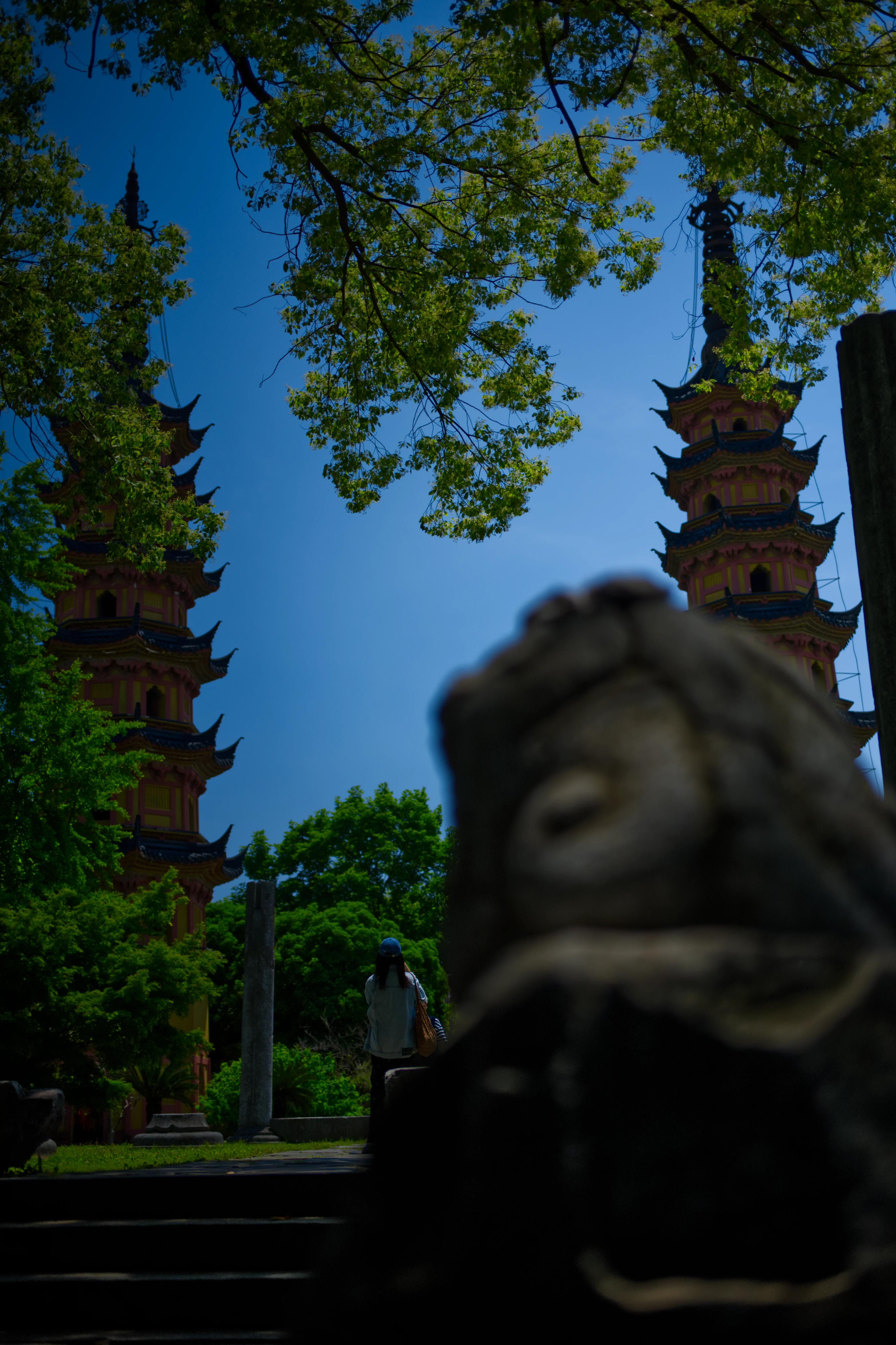
Dinghui Temple & Twin Pagodas
Dinghui Si / Shuang Ta
A pair of slender brick pagodas and an ancient monastic precinct remembered as an important Tang-era Buddhist center within the dense lane fabric of the old city.
Feng Bridge & Hanshan Temple
Fengqiao / Hanshan Si
A Tang-era poetic icon where canal shipping, monastic bells, and night moorings crystallized into one of China’s most memorized regulated verses.
Humble Administrator's Garden
Zhuozheng Yuan
A UNESCO-classical garden whose ground layers reach back to Tang poet-recluse Lu Guimeng and a Yuan Buddhist monastery before its Ming garden form took shape.
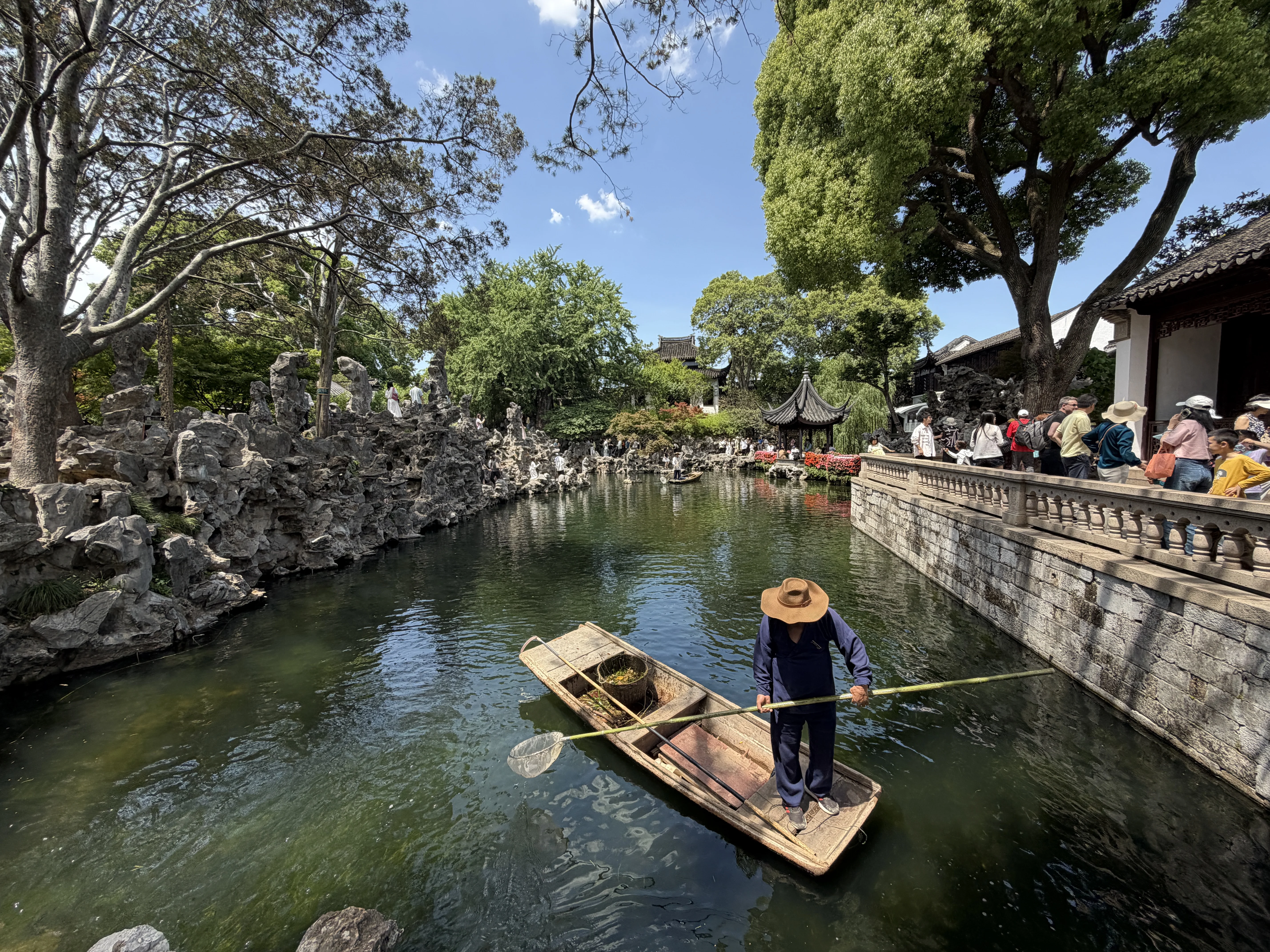
Lion Grove Garden
Shizi Lin
A Yuan-dynasty garden famous for its fantastical Taihu rockeries, where Chan Buddhist patrons wove meditation paths into a sculptural stone forest.
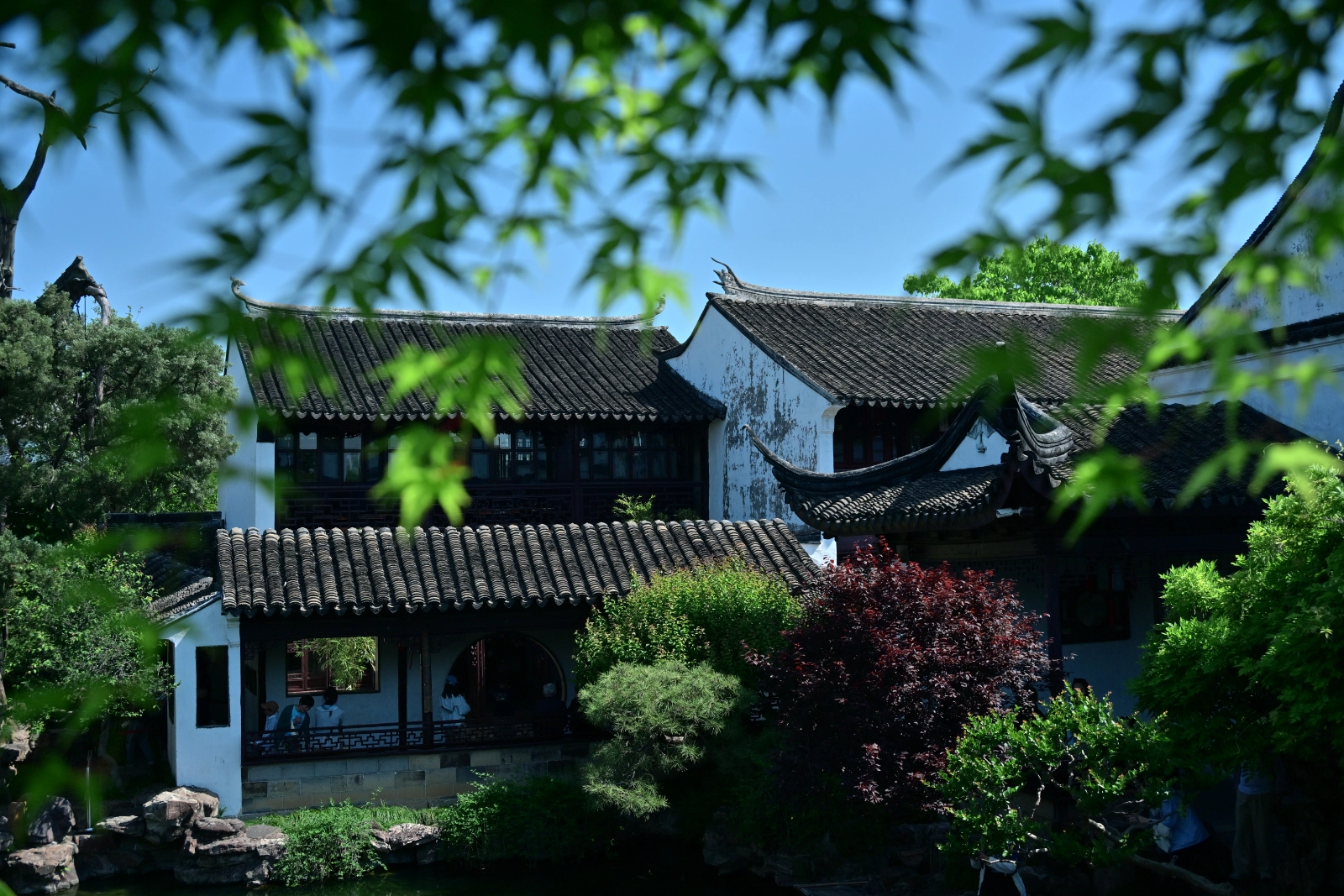
Master of the Nets Garden
Wangshi Yuan · 网师园
A compact masterpiece among Suzhou’s classical gardens—celebrated for night-view drama replicas abroad—where water, halls, and pavilions read as a single exquisitely framed scroll.
North Temple Pagoda
Beisi Ta / Bao'en Temple Pagoda
The brick pagoda of Bao'en Temple, traditionally linked to Sun Quan’s filial foundation for his mother, remains the tallest vertical marker on Suzhou’s historic skyline.
Panmen Scenic Area
Panmen Sanjing
The ensemble of Ruiguang Pagoda, Wumen Bridge, and Panmen’s water-and-land gate—often cited as China’s best-preserved combined hydraulic and defensive entrance to an old city.
Surging Wave Pavilion
Canglang Ting
One of Suzhou’s oldest surviving garden complexes, occupying grounds once tied to the Five Dynasties prince Qian Yuanguan before Song scholars reshaped its mood.
Tiger Hill
Huqiu Shan
A compact hillscape where Wu royalty, imperial legend, and Tang literati converge—home to the Sword Pool, Yunyan Pagoda, and the traditional start of Shantang Street.
Xuanmiao Taoist Temple
Xuanmiao Guan (formerly Zhenqing Guan)
A major urban temple that began as the Jin-era Zhenqing Abbey and grew into a Tang hub of Daoist activity at the heart of Suzhou’s commercial streets.
Luzhi Ancient Town
Luzhi
A dense web of stone bridges and lanes celebrated as the Tang recluse-poet Lu Guimong’s retreat landscape, distilled into a living water-town fabric.
Mudu Ancient Town
Mudu
A canal-side town whose origin lore connects to Wu Zixu piling timber into a “blocked channel” while building Helu’s capital—emblematic of Suzhou’s river-first urbanism.
Tongli Ancient Town
Tongli
Often called a compact “Venice of the East,” Tongli’s islands and concentric canals exemplify the mature Ming–Qing hydraulic neighborhood.
Zhouzhuang Ancient Town
Zhouzhuang
Jiangnan’s most internationally famous water town, whose Yuan–Ming mercantile myths around Shen Wansan dramatize Suzhou’s role in silver and long-distance trade.
Lingyan Hill
Lingyan Shan
Rising above Taihu’s edge, Lingyan carries legends of the Wu palace of Guanwa and later became a major Six Dynasties Buddhist mountain in the region.
Mount Qionglong
Qionglong Shan
A forested summit traditionally identified as where Sun Wu withdrew to compose *The Art of War*—linking Suzhou’s strategic geography to classical military philosophy.
Precious Belt Bridge
Baodai Qiao
A landmark multi-arch stone bridge traditionally funded when Prefect Wang Zhongshu donated his jade belt—built to stabilize canal towpaths where wind and waves met open water.
Tianping Hill
Tianping Shan
A scenic hill long tied to the Fan clan’s ancestral graves, celebrated for autumn maples, twisted pines, and clear springs—classic Jiangnan literati outing terrain.
Huangsi Pu
Huangsi Pu Archaeological Port
A Tang-era anchorage complex associated with Jianzhen’s eastward voyages—evidence of how the greater Suzhou region faced the sea as well as inland canals.
Jinxi Ancient Town
Jinxi
A quieter canal town in Kunshan, known for dense bridges, small museums, and a slower rhythm than neighboring Zhouzhuang—another facet of Taihu-edge settlement.
Mount Yu (Yushan)
Yushan, Changshu
Changshu’s forested Mount Yu, tied in tradition to Zhong Yong’s burial and the deep roots of Wu culture—an upland counterpoint to Suzhou’s canal plain.